You don’t need to be an economist to notice that things cost more than they used to. A trip to the supermarket, filling up the car, grabbing a coffee. It all just feels more alot more expensive that it did a year or two ago.
I wanted to do something about that. Not in a campaigning way, but in a practical, “let’s-just-keep-an-eye-on-it way”.
So I’ve built The Sensible Basket, my own monthly price tracker.
What is it exactly?
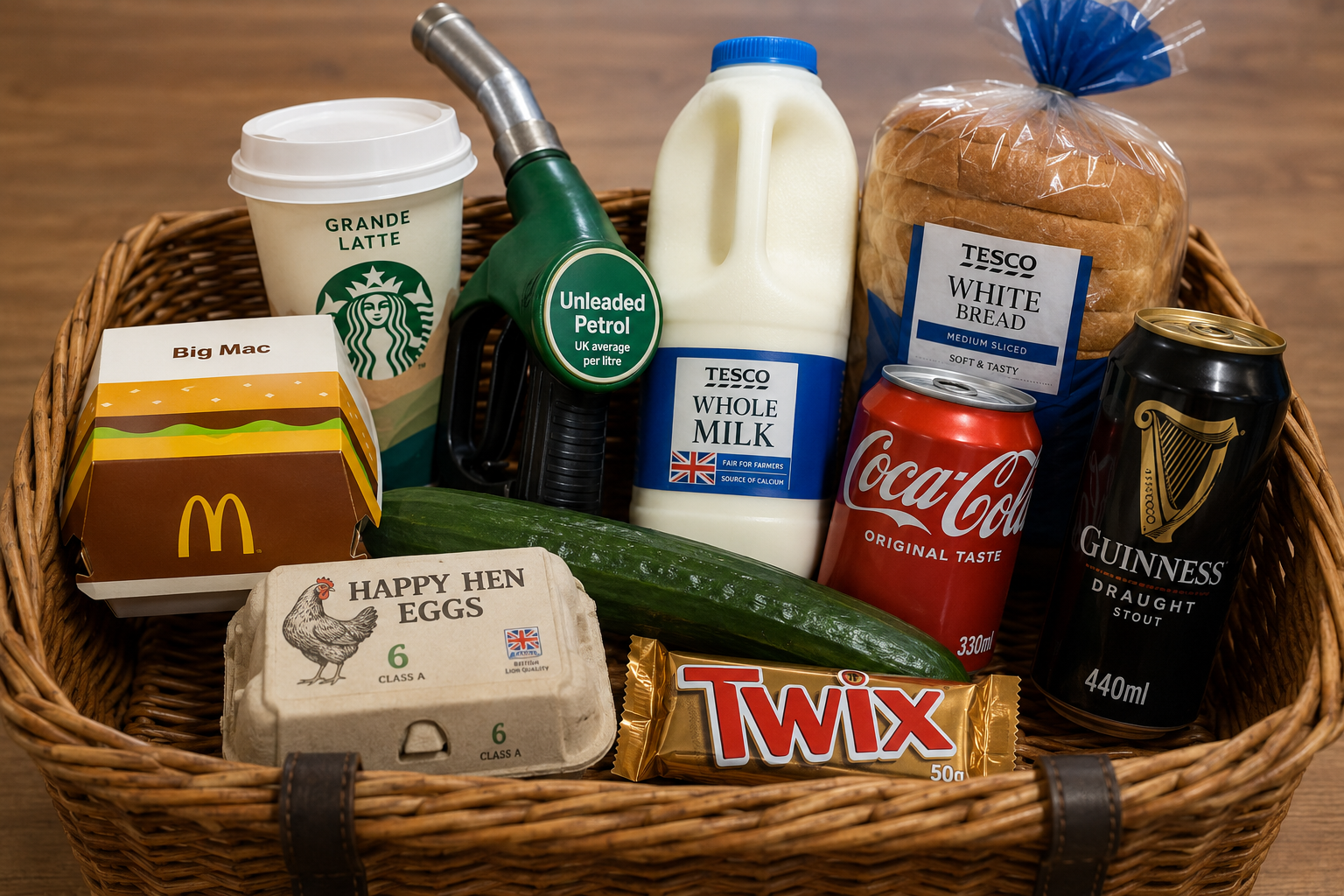
Every month I record the price of 10 everyday items. We’re talking things like a Big Mac, a Starbucks Grande Latte, a litre of unleaded petrol, a pint of milk, a loaf of bread, a can of Coke, a can of Guinness, a cucumber, a box of free range eggs, and a Twix. A fairly eclectic mix, I’ll admit, but that’s sort of the point.
The idea isn’t to track the economy scientifically. The ONS already does that with their official basket of goods, and they do it far more rigorously than I ever could. What I’m doing is more like a monthly pulse check. A simple, relatable snapshot of what a handful of things that most people actually buy cost right now, and how those prices shift over time.
Why these 10 items?
Honestly? Because they cover a decent spread. You’ve got fast food, a coffee shop staple, fuel, a couple of supermarket basics, a soft drink, a beer, something fresh, something healthy and something that is absolutely not healthy. Most people will buy at least a few of these in any given month, which makes them a reasonable reflection of everyday spending.
I’ll be honest, the Twix is partly there because I wanted something that felt a bit fun and that is also delicious! Cost of living doesn’t always have to be worthy and serious.
How does it work?
Grocery prices come from Tesco. Petrol reflects the UK government’s published weekly average pump price. McDonald’s and Starbucks prices are updated whenever they change their menus. Everything gets recorded once a month and displayed on the tracker page, so you can see both the current prices and how they’ve moved over time.
What happens next?
The plan is to stick with this selection for a good while, at least a year, before deciding whether to change anything. Much like the government’s own basket, the value is in the consistency. Swapping items in and out every few months would make the trend data meaningless.
That said, I’m open to it. If a particular item stops being relevant, or if there’s something that would make a better benchmark, I’ll consider it. Let me know in the comments if you have any thoughts.
For now, head over to The Sensible Basket to see this month’s prices. Bookmark it, check back next month, and let’s see how things change.
I have a feeling they will.